Why Real-Time Tracking Is the Backbone of Supply Chain Visibility
Supply chain visibility means knowing where your goods are and when they will arrive — at every stage of the journey. Real-time tracking is what makes that visibility possible.
From blind spots to clarity
Without tracking, every shipment is a black box between pickup and delivery. With it, dispatchers can see delays as they happen, reroute around problems, and give customers accurate updates instead of guesses.
Less risk, fewer surprises
Live data lets teams act before a small issue becomes an expensive one. Temperature alerts, route deviations, and ETA changes are surfaced instantly, protecting both the cargo and the customer relationship.
It also creates an audit trail. When a dispute arises over a late or damaged delivery, timestamped location and condition data settles the question quickly — and often prevents the claim in the first place.
Happier customers, fewer 'where is my order?' calls
Customers no longer accept 'it'll arrive sometime this week.' Live tracking and accurate ETAs set the right expectation up front and let them plan around the delivery.
That transparency pays off twice: it builds the kind of trust that drives repeat business, and it dramatically reduces inbound status enquiries — freeing your support team to focus on issues that genuinely need a human.
What to look for in a tracking solution
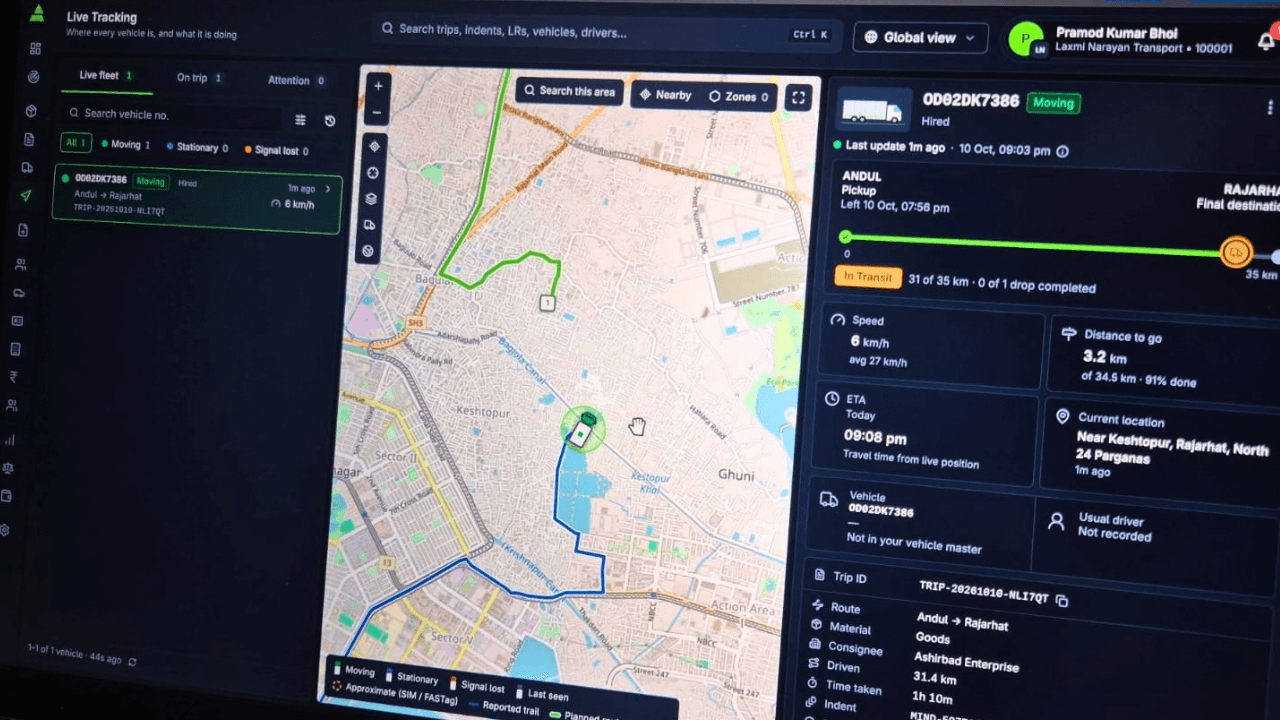
Effective visibility goes beyond a dot on a map. Look for proactive alerts that tell you when something is about to go wrong, a clean customer-facing tracking page, and historical data you can analyze to improve future performance.
Just as important is coverage: the system should track every shipment across every carrier and mode on one screen, so you're never switching between portals to piece together the full journey.
The Deltreq approach
At Deltreq, every shipment is monitored end to end. You always know where your cargo is and when it will arrive — turning visibility into a genuine operational advantage.
We surface that information where it's useful: real-time dashboards for your team, automated alerts for exceptions, and a shareable tracking link for your customers. The result is a supply chain that feels less like a black box and more like glass.